What is Indirect Bonding?
Indirect bonding is a technique used to place braces on a patient's teeth. Unlike traditional direct bonding, where each bracket is individually placed and adhered to the teeth in the patient's mouth, indirect bonding involves a more streamlined and precise process. Here's how it works:-
- Impressions or Digital Scanning: The first step in indirect bonding is taking an accurate impression or digital scan of the patient's teeth. At our office, we use the iTero 5D Element Scanner to accurately scan the entirety of our patients mouths and bite. This creates a detailed model of the mouth, which is used to plan the exact placement of each bracket.
- Laboratory Fabrication: Using the digital 3D model, the orthodontist determines the ideal position for each bracket. The brackets positions are then finalized on the 3D models. This ensures precise placement according to the patient's unique dental anatomy and treatment plan.
- Transfer Tray Creation: Once the brackets are simulated on the 3D model, a custom transfer tray is created and printed by a 3D printer. The brackets are then loaded onto the tray. This tray holds the brackets in their exact positions and is used to transfer them to the patient's mouth.
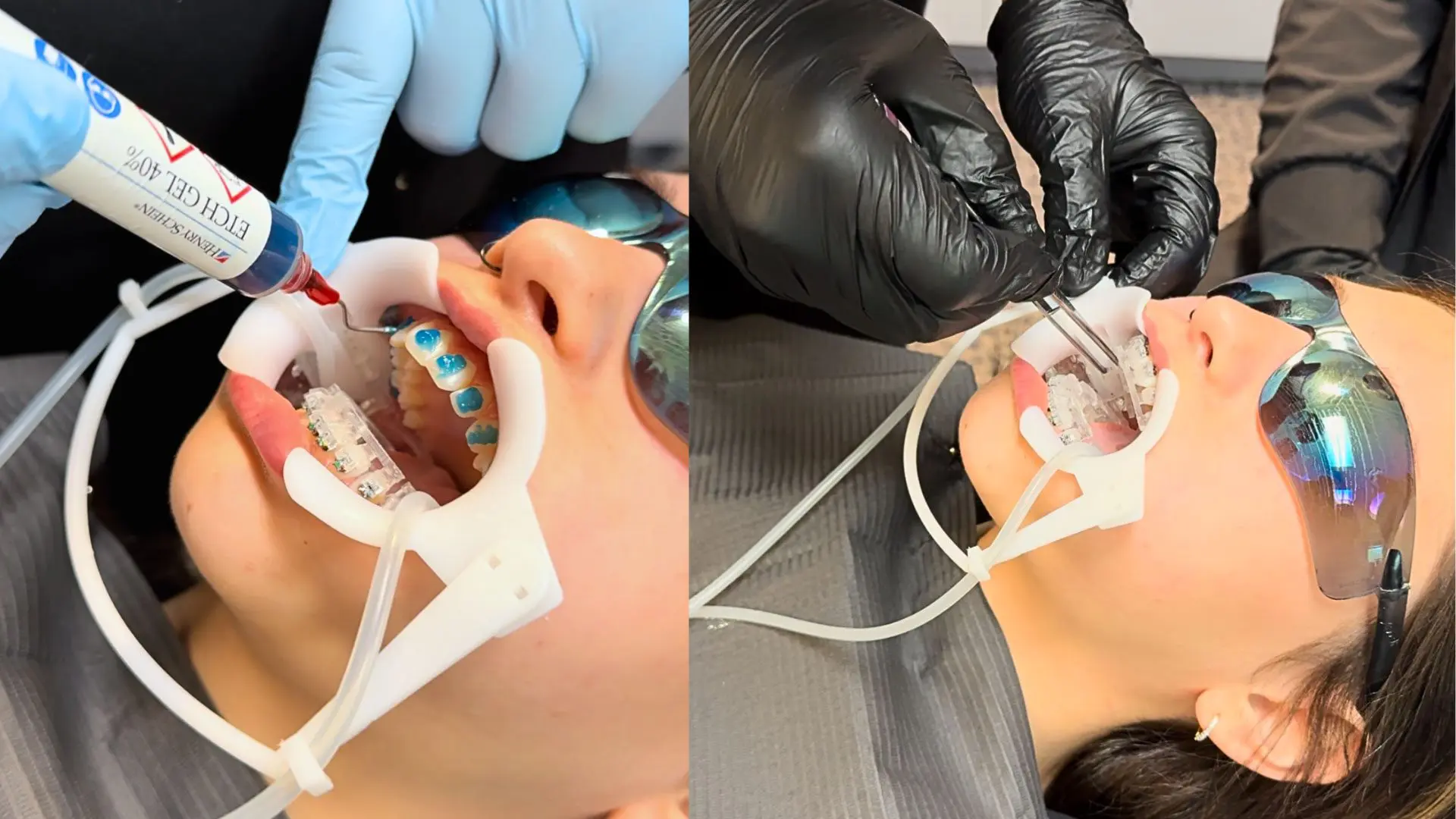
Daia Orthodontist using indirect bonding for braces placement
- Bracket Placement: During the bonding appointment, the patient’s teeth are cleaned and prepared for the bonding. The bonding agent is placed on the brackets loaded on the tray. The transfer tray, with the brackets securely in place, is fitted onto the patient's teeth. Then the orthodontist cures the bonding agent. After that the trays are removed, leaving the brackets perfectly positioned on the teeth.
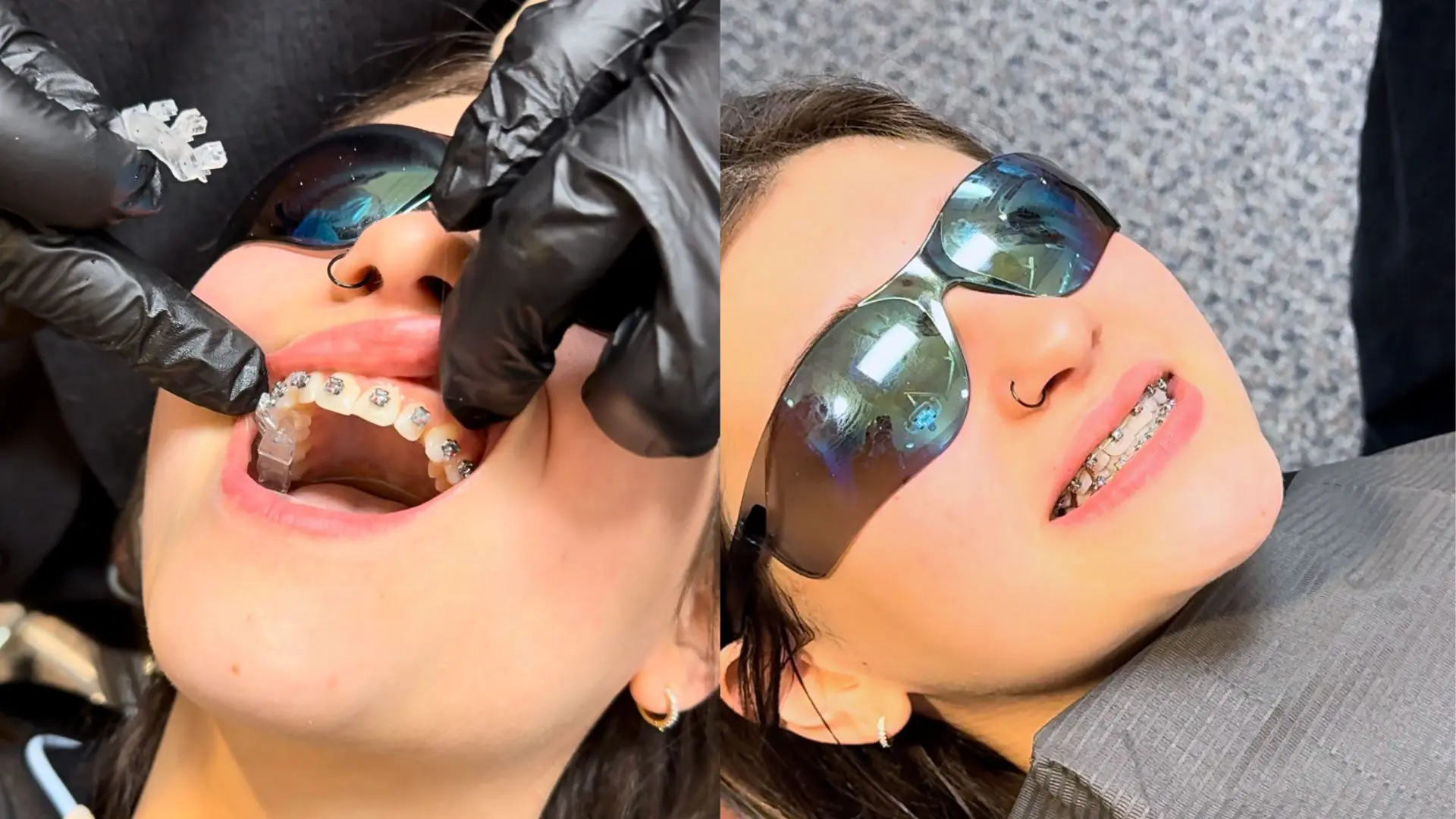
Orthodontist using indirect bonding for braces placement
Benefits of Indirect Bonding
Indirect bonding offers several significant advantages over traditional direct bonding methods:- Precision: Because the brackets are placed on a model of the patient's teeth in a controlled laboratory setting, the placement is highly precise. This accuracy can lead to more effective and efficient treatment outcomes.
- Comfort: Indirect bonding typically involves shorter chair time for the patient. The entire process of placing the brackets in the patient's mouth is faster, reducing discomfort and anxiety associated with long orthodontic appointments.
- Improved Bond Strength: Brackets bonded in a laboratory setting under optimal conditions often result in stronger bonds. This can reduce the likelihood of brackets coming loose during treatment, which means fewer emergency visits and interruptions in the treatment process.
- Aesthetic Placement: Indirect bonding allows for better visualization and planning of bracket placement, which can improve the aesthetic outcomes of the treatment.