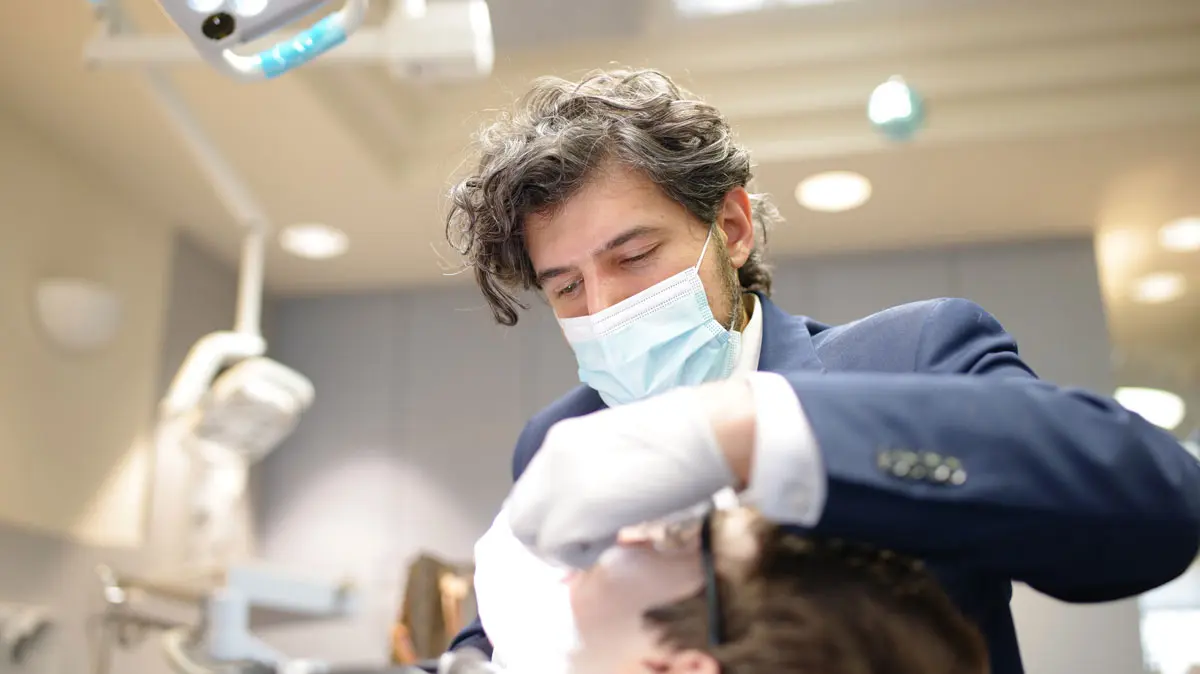
Most people assume that any dentist can straighten teeth. Technically, some do. But the training gap between a general dentist and a board-certified orthodontist is broader than most patients realize, and in 2026 that gap has grown in a new direction: technology.
Orthodontics has always been a specialty built on years of extra training. Now it also requires a working command of AI-driven diagnostics, 3D printing, and digital treatment planning.
Here is a glimpse of what goes into becoming a successful orthodontist, and what patients should look for when choosing a provider.
Orthodontist vs. Dentist: What Is the Difference?
Every orthodontist started as a dentist. The reverse is not true.
A general dentist completes dental school and is licensed to handle cleanings, fillings, extractions, general oral health, and restorations including crowns, implants, and dentures. An orthodontist completes dental school and then applies to a separate, competitive residency devoted entirely to tooth movement, jaw growth, and facial development.
| General Dentist | Orthodontist | |
|---|---|---|
| Degree | DDS or DMD | Has further postgraduate academic education; many obtain a master’s or a PhD |
| Additional training | None required | 2 to 3 years of CODA-accredited residency |
| Focus includes | Oral health. A broad exposure to the basics of a multitude of disciplines like restorative dentistry, endodontics, periodontics, orthodontics, oral pathology, and oral surgery |
|
| Board certification available | National Board Dental Examination | American Board of Orthodontics (voluntary) |
| Total years after high school | About 8 | About 10 to 11 |
The Academic Path of an Orthodontist
The path is long, and each stage filters the field a little more.
Undergraduate Degree
Four years, usually with a heavy science load in biology or chemistry to satisfy dental school prerequisites.
Dental School
Four additional years to earn a Doctor of Dental Surgery (DDS) or Doctor of Dental Medicine (DMD). Graduates take the National Board Dental Examination during this period. At this point, a dentist can legally practice after they satisfy the requirements of their state or province and obtain a license to practice.
Orthodontic Residency
This is the step that creates a specialist in orthodontics. Residency programs accredited by the Commission on Dental Accreditation (CODA) run two to three years and are limited to a small number of positions each year. Residents spend that time on:
- Biomechanics of tooth movement
- Craniofacial growth and development
- Cephalometric and 3D imaging analysis
- Diagnosis and treatment planning for complex bite problems
- Hundreds of supervised clinical cases
- Research requirements, often leading to a master’s degree
Board Certification
Board certification through the American Board of Orthodontics (ABO) is voluntary. Not every orthodontist is successful in completing it. This recognition requires passing a written examination and a scenario-based or case-based clinical examination judged by a panel of peers, and it has to be continuously renewed and maintained over the course of a career.
When you see “board certified,” it signals that an orthodontist chose to be evaluated and recognized on their clinical and scientific judgment by other specialists after completing their academic and clinical training.
The Skills That Separate Good From Great
Credentials get an orthodontist in the door. Day-to-day success in 2026 comes down to a different list:
- Diagnostic judgment. Reading what a scan does not show, and knowing when a case needs surgery, extraction, or a referral.
- Understanding the whole system. Teeth, jaw joints, muscles, and airway are connected. Orthodontists trained in TMJ and orofacial pain catch problems that a purely cosmetic approach misses.
- Clear communication. Patients follow through on treatment they understand. That includes clear communication with other practitioners, like the patient’s dentists and physicians.
- Fluency with new tools. Not chasing every gadget, but knowing which technology genuinely improves performance and comfort.
- Ongoing education. Techniques that were standard ten years ago have been replaced.
Keeping Up With Modern Technology
Digital and AI tools have changed how treatments are planned, delivered, and monitored. Staying current is now part of giving patients the most effective treatment there is to offer.
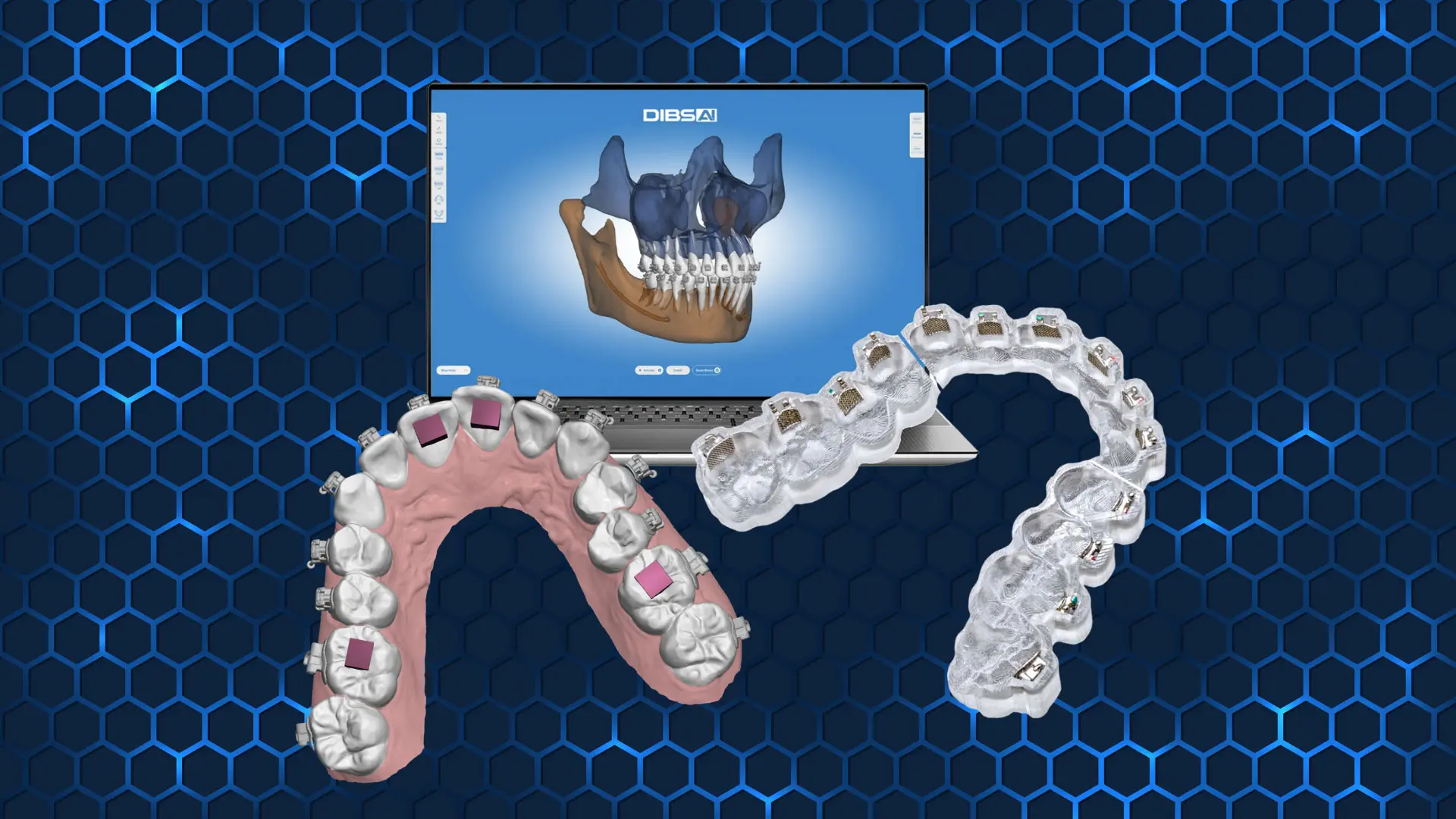
DIBS AI for Precision Bracket Placement
DIBS AI plans exactly where each bracket belongs before it touches a tooth. Brackets are positioned on a custom tray and bonded all at once. The appointment is shorter and the placement is more accurate than doing it by hand, one bracket at a time. Daia Orthodontics uses this system for braces patients.
LightForce for Custom 3D-Printed Brackets
Standard braces use off-the-shelf brackets that get adjusted manually. LightForce pairs AI-generated protocols with 3D printing so every bracket is built for the specific tooth it sits on, which often shortens treatment time.
CephX for AI Imaging Analysis
CephX combines 3D scans, X-rays, and photos into a single digital platform, identifies anatomical landmarks automatically, and produces analysis of jaw alignment and airway space in minutes rather than hours.
Invisalign Outcome Simulator Pro
Patients see a preview of their own straightened smile during the consultation. The simulator draws on Invisalign’s database of more than 22 million treated smiles, so the projection is grounded in real cases. Access to Invisalign’s most advanced tools tends to track with case volume, which is part of why provider tier is worth checking before you commit.
Remote Monitoring
AI review of weekly phone photos flags loose brackets, aligners that are not tracking, or slow movement between visits. Fewer routine appointments, faster response when something is off.
None of this replaces the orthodontist. Software provides better information. A trained specialist still makes every clinical decision.
For a deeper look at these tools, read our full breakdown of AI in orthodontics.
Why Choose Dr. Daia
Dr. Hadi Daia, DDS, MS, FRCD(C), took a longer route than most orthodontists, and it shows in the range of cases he handles.
Two Residencies
After earning his Doctorate of Dental Surgery in 2005 and practicing general dentistry, Dr. Daia noticed how few clinicians understood the neuromuscular relationship between the teeth, jaws, head, and neck. He completed a residency at the University at Buffalo in Temporomandibular Joint Disorder (TMD) and orofacial pain, with a concentration in headaches and migraines, earning a Master of Oral Sciences in 2010. He then returned to the University at Buffalo for a second residency in Orthodontics and Dentofacial Orthopedics, completed in 2014.
Certification in Two Specialties
Dr. Daia holds:
- Diplomate status with the American Board of Orthodontics
- Diplomate status with the American Board of Orofacial Pain
- Fellowship with the Royal College of Dentists of Canada in the specialty of Orthodontics
Very few clinicians worldwide hold all three of these statuses.
Published Author
In 2011, Dr. Daia published Low Level Laser Therapy for Management of Temporomandibular Disorders, a book that grew out of his interest in how advanced technology could improve outcomes for TMD and orofacial pain patients. That interest in evaluating new technology on clinical merit is the same innovative thinking behind the tools used in the practice today.
Recognition and Community Work
- 2026 Invisalign Blue Diamond Provider, a status based on treatment volume that places him among the most experienced Invisalign providers in the country
- Hour Detroit Magazine Top Dentists honoree
- Doctor Advisory Council member, Canadian Orthodontic Partners
- Executive board of directors, International Institute of Metropolitan Detroit and Syrian American Rescue Network
- Past nonprofit service with the Edmonton Regional Search & Rescue Association, the Niagara Frontier Search & Rescue Team, and H.E.A.L. International
He has also expanded into treatment for orthognathic surgery cases, sleep medicine, and rare conditions such as burning mouth syndrome.
What This Means for Your Treatment
Training affects outcomes in ways that directly impact patients:
- Complex bite and jaw problems get diagnosed correctly the first time
- TMJ, jaw pain, and headaches are evaluated alongside alignment, not separately
- Treatment plans are built on data from millions of comparable cases
- Fewer visits, efficient treatment, and clearer timelines
Questions to Ask Orthodontists
- Did you complete a CODA-accredited orthodontic residency?
- Are you board certified by the American Board of Orthodontics?
- What technology do you use for scanning and treatment planning?
- How do you handle cases involving jaw pain or airway concerns?
- Can I see the projected outcome before I commit?
Schedule Your Free Consultation
If you are weighing braces or Invisalign for yourself or your child, a consultation is the fastest way to get real answers about your options and timeline.
Call Daia Orthodontics at 248-652-1244. We are located at 930 W Avon Rd, Suite 16, Rochester Hills, MI 48307.